

2026-03-16
As the annual Two Sessions open a new journey with spring breeze, the gathering draws a grand blueprint for development.
The 2026 National Two Sessions falls in the opening year of the "15th Five-Year Plan". Standing at the critical juncture of profound changes unseen in a century and national rejuvenation, the event outlines the coordinates for the era's progress, based on public aspirations and prioritizing development.
Artificial intelligence activates the core of new quality productive forces.
Green development anchors the course for sustainable development.
Private economy consolidates the foundation of the real economy.
"De-involution" conveys social consensus for high-quality development.
......
Each trending keyword is not only an accurate implementation of national strategy, but also a vivid expression of public aspiration, combining policy height, development depth, and breadth of people's livelihood.
Focusing on hot Two Sessions keywords, we decode profound policy implications and capture the general trend of the times, resonating with the nation and moving together toward a new journey of high-quality development. This issue focuses on a Two Sessions hot keyword, interpreting "future energy" for you.
Keeping Pace with the Times: Advancing Energy Development toward "Quality Improvement"
In this year's Government Work Report, future energy was listed alongside quantum technology, embodied intelligence, brain-computer interfaces, and 6G as a future industry to nurture and develop. This marks the first time "future energy" has been officially written into the Government Work Report, and it is placed at the top of the future industry sequence. This upgrade sends a clear signal: China's energy strategy is shifting from simple energy substitution to a new stage characterized by core technological breakthroughs and industrial system restructuring.
The evolution from "new energy" to "future energy" witnesses how China's energy development has kept pace with the times. Over the past decade and more, China has promoted new energy development with firm resolve, achieving a world-renowned leap. By the end of 2025, China's total installed power generation capacity approached 3.9 billion kilowatts, with installed wind and solar power capacity historically surpassing coal-fired power. Large-scale new energy bases in deserts, Gobi, and desertified regions ("Sha-Ge-Huang") have been basically completed and put into operation, laying a solid foundation for green and low-carbon transition. Facing new challenges brought by large-scale integration of new energy, China's energy strategy has evolved with the times: building on the existing scale advantage of new energy, it now opens up new space for future energy technological breakthroughs and construction of green fuel systems. The proposal of "future energy" represents an extension and transcendence at a higher starting point, marking a solid step forward in China's energy development from solving the question of "whether we have it" to pursuing "whether it is good."
Future energy does not replace existing new energy. Instead, it is a diversified energy form that builds on mature clean energy sources like photovoltaics and wind power, takes hydrogen energy and nuclear fusion as core directions, and integrates technologies such as energy storage and smart grids. Its core essence is to achieve clean, stable, and sustainable energy supply, solve current industry pain points such as output fluctuation and grid integration difficulties of new energy, and lay a solid foundation for building a new energy system.

Diversified Integration: Creating a New Paradigm for Large-Scale Application
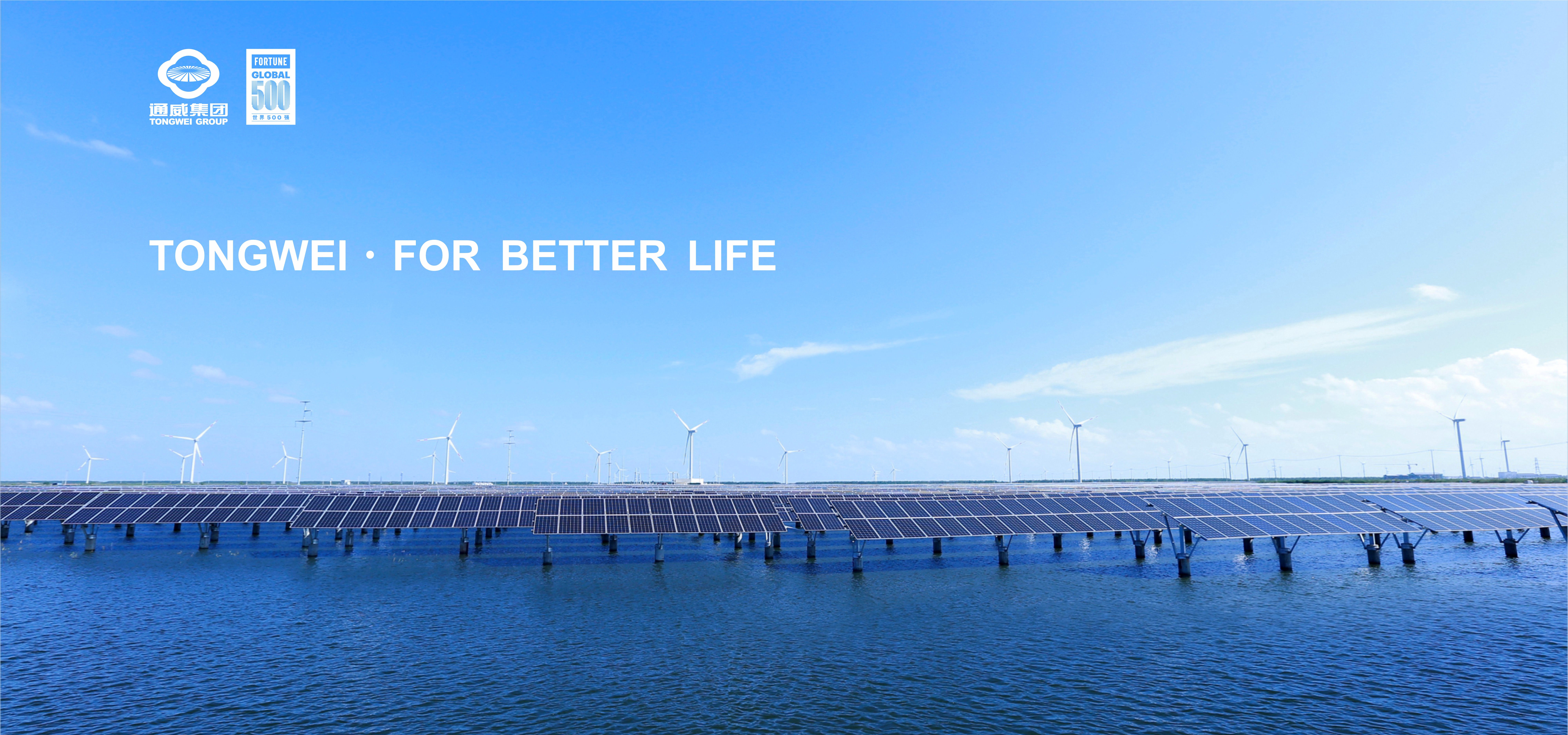
As a benchmark in China's new energy development, the photovoltaic industry has formed a globally leading full industrial chain advantage, making it an important foundation and core support for future energy development. The in-depth integration of photovoltaics and future energy has become an inevitable trend in energy transition. After years of development, the cost of photovoltaic power generation has dropped by more than 90%, making it the most economical power generation method in the world. Its clean electricity provides core energy guarantee for future energy development: the technological path of producing hydrogen from green electricity has become increasingly mature, freeing hydrogen energy from dependence on fossil fuels and truly realizing "green hydrogen from green energy." The coordinated development of photovoltaics and energy storage has also accumulated technical experience and market scenarios for large-scale application of future energy.
The proposal of future energy opens up new possibilities for development in the energy sector, driving scientific research, theoretical research, and engineering practice to explore in more directions. This is why the country needs to promote development in the future energy field through institutional innovation and top-level design. In these uncharted new technological fields, there are still many development paths. If we do not take the initiative, other countries may overtake us on curves, leaving China in a passive position in core technology development and future energy system construction. Therefore, elevating future energy to a strategic height is both appropriate and extremely necessary.
Forward-Looking Layout: Accelerating the Construction of an Energy Powerhouse
In recent years, despite the rapid development of new energy, fossil energy still accounts for 80% of China's primary energy consumption. In 2025, China spent nearly 300 billion U.S. dollars on crude oil imports, with total fossil energy imports exceeding 440 billion U.S. dollars. Total crude oil imports exceeded 570 million tons, with foreign dependence exceeding 70%, of which 80% must pass through the Strait of Malacca, creating significant hidden risks to energy security. Seventy percent of China's crude oil consumption is used for transportation. If all transportation were electrified and replaced with clean energy, China could save about 300 billion U.S. dollars in foreign exchange annually, effectively safeguarding China's foreign exchange security and once and for all solving the "bottleneck" problem in energy security.
During this year's National Two Sessions, Liu Hanyuan, National People's Congress deputy, vice chairman of the All-China Federation of Industry and Commerce, and chairman of the Board of Directors of Tongwei Group, proposed that photovoltaic manufacturing should be included in energy industry management. At the critical juncture when the country is fully promoting the "dual carbon" goals, the photovoltaic industry should no longer be managed as an ordinary manufacturing industry. This will better protect its leading advantage already formed in global competition, and better recognize its important role in China's energy transition and its great strategic significance for national energy and foreign exchange security.
Promoting energy structure transformation and ensuring energy supply security has always been an important task for development. Nurturing and developing future energy will provide strong support for energy security and high-quality development. Green hydrogen, ammonia and alcohols in the future energy system can be produced independently using China's abundant wind and solar resources, transported and integrated through existing oil and gas pipeline infrastructure, accelerating the formation of a clean energy internal cycle of "green electricity – green hydrogen – green fuels." At the same time, as an important track for nurturing new quality productive forces, future energy involves multiple fields including materials science, artificial intelligence, and advanced manufacturing, with long technology chains and strong driving effects. From photovoltaic technology iteration to electrolytic water hydrogen production efficiency improvement, from nuclear fusion facility construction to biomass fuel synthesis, every link contains enormous industrial opportunities.

Future energy is a forward-looking layout of national strategy, an inevitable direction for energy transition, and an important support for high-quality development. From global leadership in new energy such as photovoltaics to accelerated breakthroughs in future energy such as hydrogen energy and nuclear fusion, China's energy industry is moving steadily toward building a new energy system with an attitude of diversified integration and coordinated development. Under the combined force of policy guidance, technological breakthroughs, and industrial collaboration, future energy will surely illuminate a new landscape of energy revolution and inject continuous new momentum into achieving the "dual carbon" goals and building an energy powerhouse.